In our AI-shellacked world where nothing is real, occasionally we should give ourselves permission to believe that anything is real. A much-needed escape from our inescapable unreal reality. A coping mechanism for those weary of the fake slop that has shaped our mired-down existences and bullshit world.
So when you go see Oh, Mary! do yourself a favor and pretend this was really how Mary Todd Lincoln and her husband, Abraham Lincoln, navigated their time together. As much fun as it is to indulge in the satire, the farce, and the hilarious inanity of this show, it’s even more fun to see how this is a story about a relationship. An ill-fated marriage between two household-name adults. A spite-addled, trap-door, co-imprisoned spiral between two people at stages in their lives where they can’t be anyone but themselves.
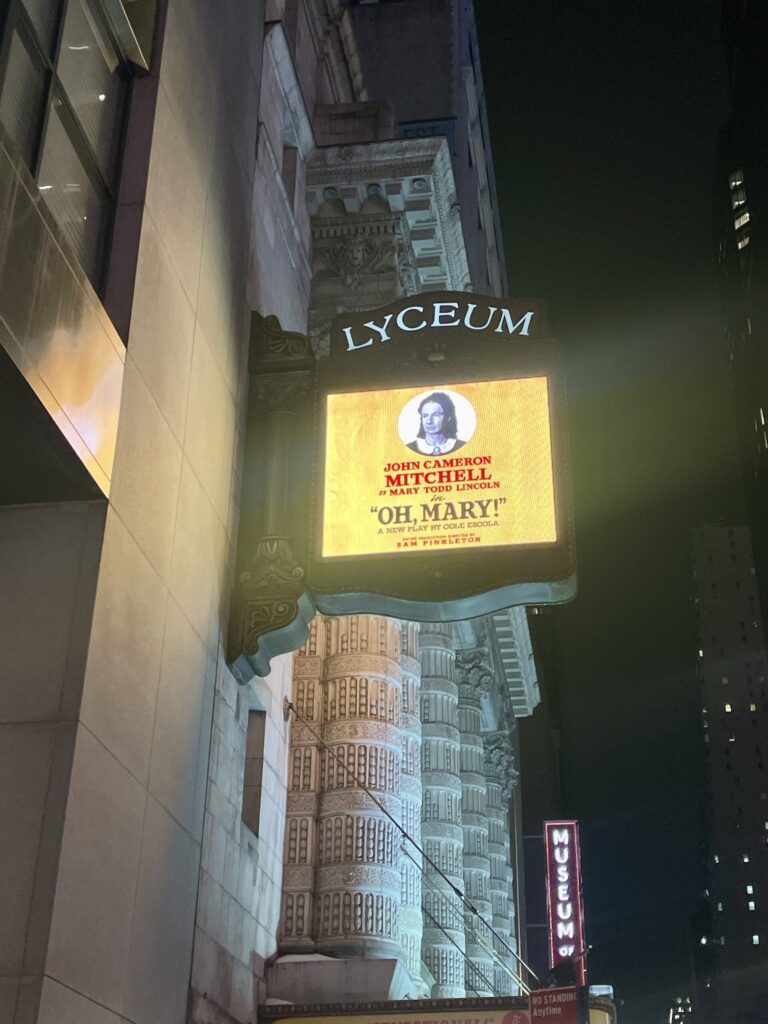
And that’s the best type of character-driven story—a person who can’t help but be themselves even if the consequences are dire. I have no idea how John Cameron Mitchell, who plays Mary, brings such sustained energy to his uproarious performance. (Note: I actually say that a lot about Broadway. These performers are so talented, disciplined, and mentally tough. The way they do these physically and emotionally taxing performances multiple times a day, week after week, is—to me—incredible. But every time I say that my wife, a Broadway connoisseur, looks at me the way I look at her when I make us watch football and she comments on their uniforms.)
A Masterclass in Manic Revisionism
The premise of Oh, Mary! is, on paper, an exercise in absurdity. We find Mary Todd Lincoln not as the tragic, mourning figure of history books, but as a “madwoman” in the most literal and campy sense of the word. She is a frustrated cabaret performer trapped in the White House, pacing the floorboards like a caged animal whose only sustenance is whiskey and the desperate need for an audience.
Cole Escola, who wrote the play and originated the role (with Mitchell now stepping into those chaotic shoes), has crafted a piece of theater that feels less like a history lesson and more like a fever dream. Or, one could say, less like history and more like the present. Anyway. The play ignores the Civil War almost entirely, treating the existential threat to the Union as a mere backdrop to Mary’s existential boredom. It is a bold, bratty, and brilliant choice. By shrinking the scope of the presidency down to the size of a claustrophobic parlor room, the show highlights the hilarious pettiness of power, and the absurdity of human existence in general.
The Chemistry of Contempt
What makes the show transcend simple parody is the dynamic between Mary and Abe. This isn’t just a series of sketches. It is a portrait of a “spite-addled” union. The Lincoln of this play is a man burdened not by the weight of the Emancipation Proclamation, but by the weight of a wife he cannot control and a secret life he can barely hide.
The dialogue snaps with a rhythmic, vaudevillian cruelty. Their exchanges are a game of high-stakes verbal tennis where the ball is made of lead and dipped in acid.
- The Power Struggle: Mary wants to be a cabaret “Medley Star.” Abe wants her to be a quiet, dignified First Lady.
- The Tragicomedic Loop: Every time they reach a point of supposed understanding, the trap-door of their individual neuroses snaps open, plunging them back into the abyss of mutual annoyance.
It is rare to see a Broadway production lean so heavily into the “unlikable” qualities of its protagonists and emerge with something so profoundly watchable. We aren’t rooting for them to succeed in the traditional sense. We are rooting for them to destroy each other in the most entertaining way possible.
The Art of the “Inane”
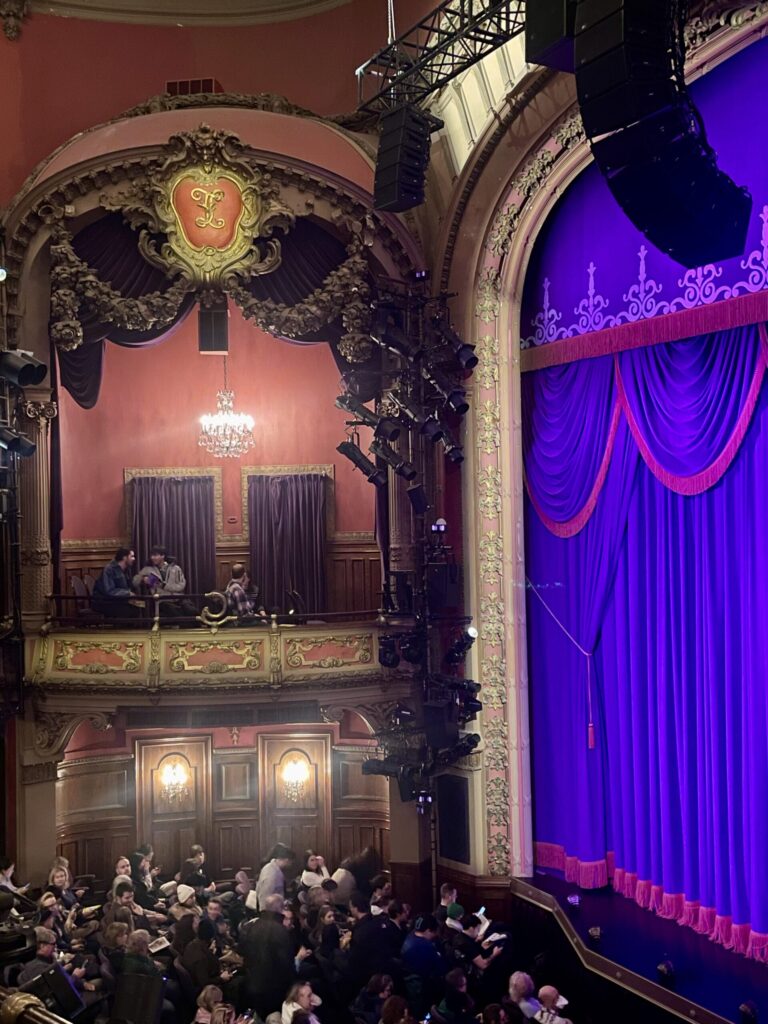
Visually and structurally, the production embraces the aesthetics of a low-budget melodrama, which only heightens the comedy when paired with the prestige of a Broadway stage. The sets feel intentionally transient, emphasizing that these characters are just “playing” at being historical figures.
| Element | Impact on the Performance |
| Costuming | Absurdly oversized and restrictive, mirroring Mary’s mental state. |
| Pacing | A relentless 80 minutes with no intermission, leaving the audience as breathless as the lead. |
| Tone | A seamless blend of high-brow wit and low-brow slapstick. |
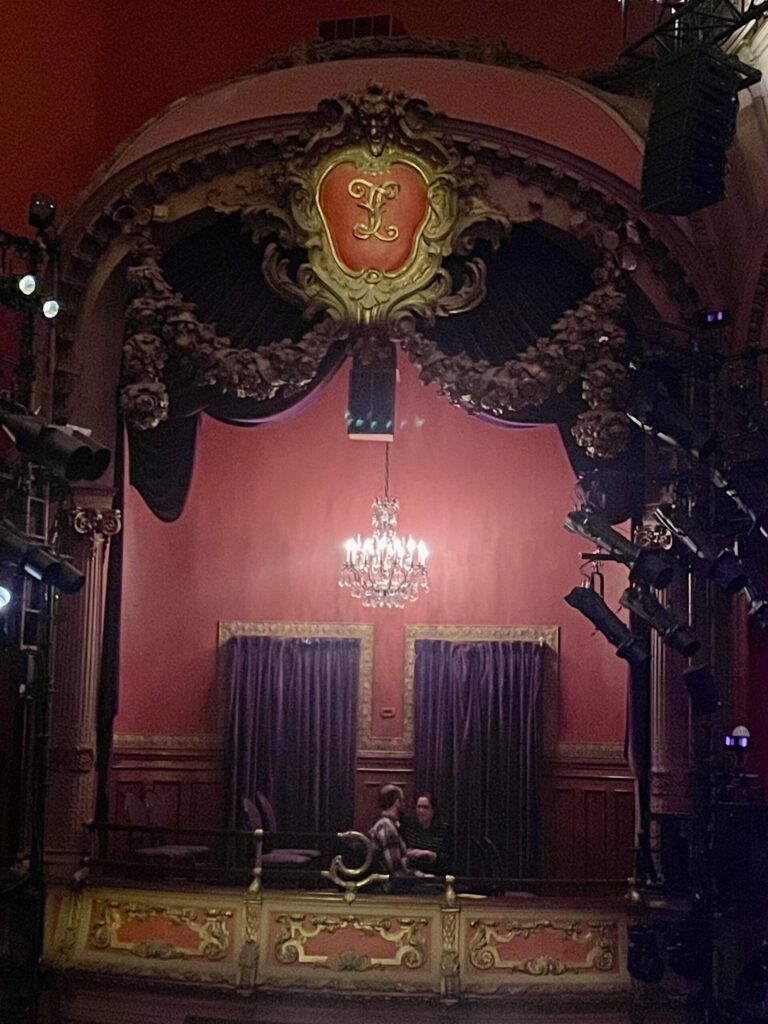
The “hilarious inanity” mentioned earlier is actually a very disciplined form of comedy. It takes immense technical skill to make a scene about a chaperone or a misplaced bottle of hooch feel like a life-or-death crisis. Mitchell’s performance, in particular, is a kinetic marvel. He doesn’t just play Mary—he vibrates at a frequency that threatens to shatter the Lyceum’s glowing chandeliers. It is a performance of pure, unadulterated id.
Why It Matters Now
In a cultural landscape that often feels sterilized, where serious theater is frequently synonymous with “somber and long,” Oh, Mary! is a radical act of joy. It suggests that the best way to handle the “slop” of our reality is to lean into the ridiculous.
It reminds us that history is often just a collection of people who were tired, horny, drunk, or simply bored, trying to navigate their day-to-day lives while the world burned around them. By stripping away the marble-statue dignity of the Lincolns, the play finds something much more “real” than a documentary could ever capture: the messy, ugly, hilarious truth of being stuck with another person. The wrong person. It’s a story as old as time. And one that will always be funny.
If you are weary of the “unreal reality” of the 21st century, go see this show. Let the sustained energy of the performance wash over you like a . Admire the costumes if you must, but stay for the magnificent, spiteful spiral. It’s the most honest thing on Broadway. And none of it is true. Or most of it, anyway. Does it really even matter?
See you under the marquee. – Jim Thompson