
Rising modestly yet unmistakably on West 45th Street, the Imperial Theatre has long been one of Broadway’s most dependable homes for sweeping narratives, classic musicals, and the kind of emotional punch that stays with you long after the curtain falls.
Operated by the Shubert Organization and opened in 1923, the Imperial was designed by architect Herbert J. Krapp. His charge was straightforward: create a beautiful, functional, and flexible musical theatre house that could handle spectacle, intimacy, and everything in between. A century later, the Imperial remains exactly that kind of space.
A Century of Musical Theatre Landmarks
From the start, the Imperial established itself as a major player in the Broadway musical scene. Its early decades featured a range of productions, including Rose-Marie, one of the most successful operettas of the 1920s. By the 1940s and 1950s, the theatre hosted some of Rodgers and Hammerstein’s most iconic titles, among them Oklahoma! and Carousel, both of which helped solidify the musical as a distinctly American art form. The theatre’s reputation continued to grow in subsequent decades with landmark productions such as Fiddler on the Roof, Pippin, and the long-running hit Les Misérables.
More recently, the Imperial has been home to shows like Billy Elliot the Musical, Nice Work If You Can Get It, Natasha, Pierre & The Great Comet of 1812, Ain’t Too Proud, and the upcoming 2025 production of Chess. The overall list reads like a condensed history of the Broadway musical itself. If you walk into the Imperial, you are stepping into a place where countless performers, directors, designers, and audiences have shaped the cultural heartbeat of New York.
Design, Architecture, and Interior Experience
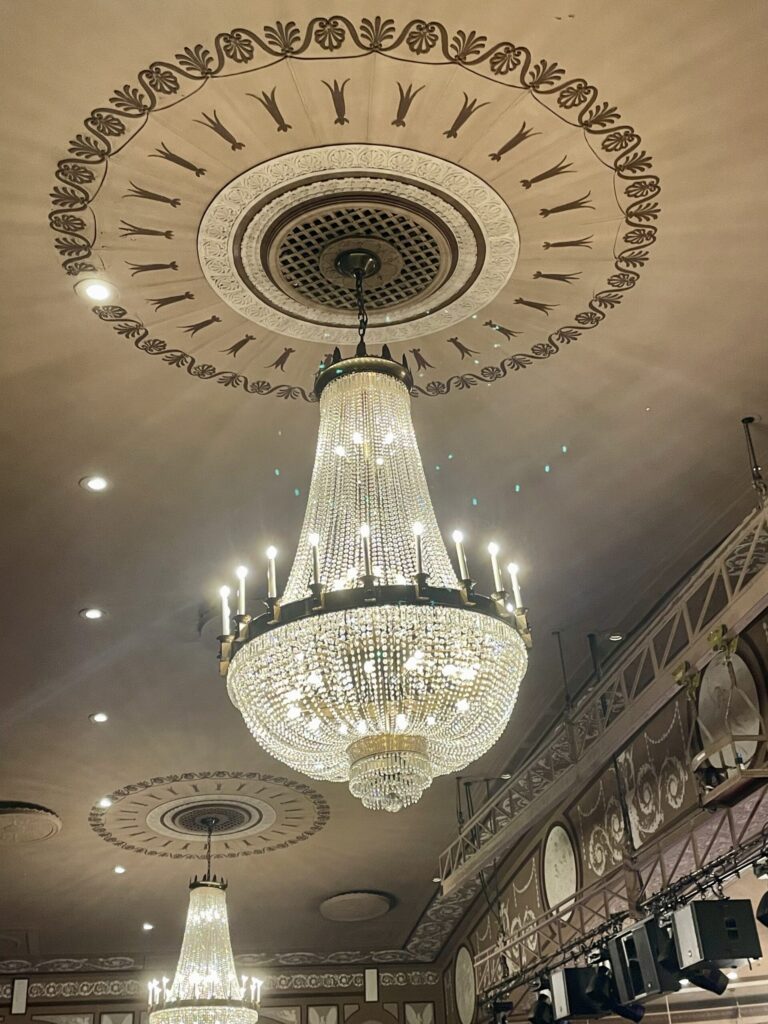
The Imperial’s design is characteristic of Krapp’s approach during the Shubert era. Functionality mattered, but so did atmosphere. The façade is restrained, elegant, and in keeping with the midtown theatre district’s 1920s sensibilities. Inside, the house reveals its character through warm gold tones, period detailing, and a sense of scale that feels both grand and human.
The auditorium seats just over 1,400 people, placing it in the mid range of Broadway houses. This size works to its advantage. Large musicals can breathe and play big, yet the theatre remains intimate enough that audiences feel connected to what is unfolding onstage. Sightlines are generally strong throughout the orchestra and mezzanine, and the rake in the orchestra section provides a comfortable viewing angle even from mid row.
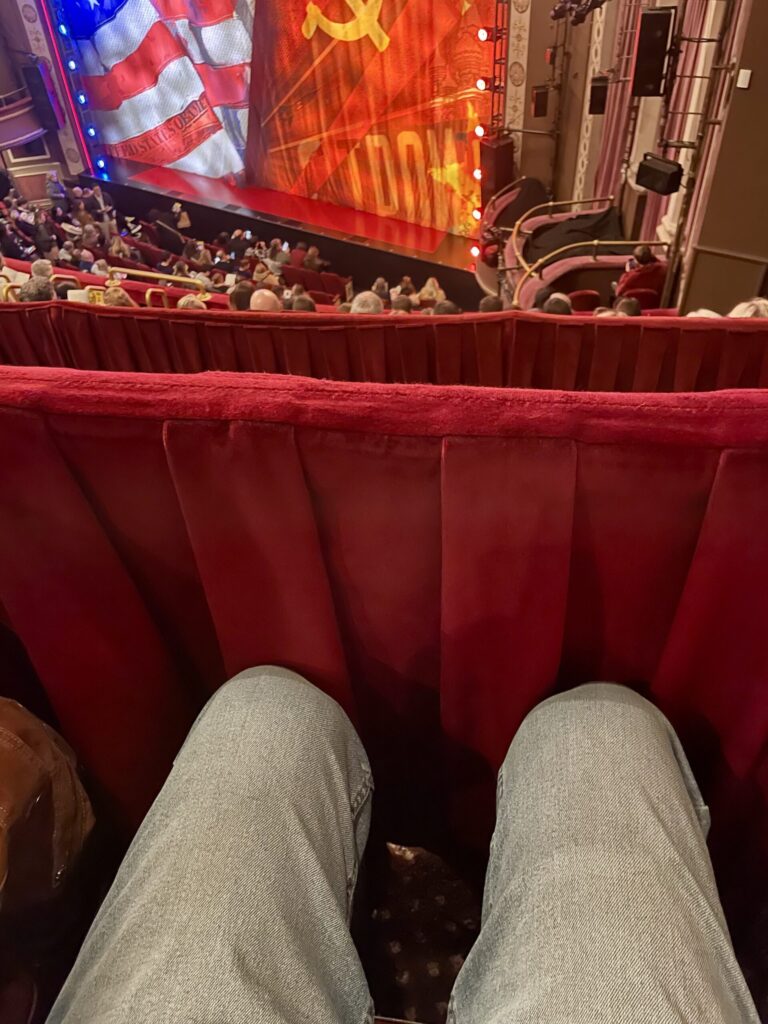
The mezzanine is known for excellent acoustics and a sense of closeness to the stage that surprises first time visitors. The lobby retains touches of its early 20th century origins, with decorative moldings, lighting fixtures, and soft curves that reflect the period’s design aesthetic. It is not as ornate as some of Broadway’s most lavish houses, but what the Imperial offers is coherence. It is a traditional Broadway musical theatre space that feels cohesive, welcoming, and built for storytelling.
The stage itself is wide and deep, a technical advantage that has allowed the theatre to handle lush scenery, large ensembles, and technically complex productions. Shows like Les Misérables and The Great Comet of 1812 took full advantage of that flexibility. The backstage area and technical infrastructure have been updated over the years, and while the theatre maintains its historical charm, it still functions as a modern Broadway venue.
How to Get There
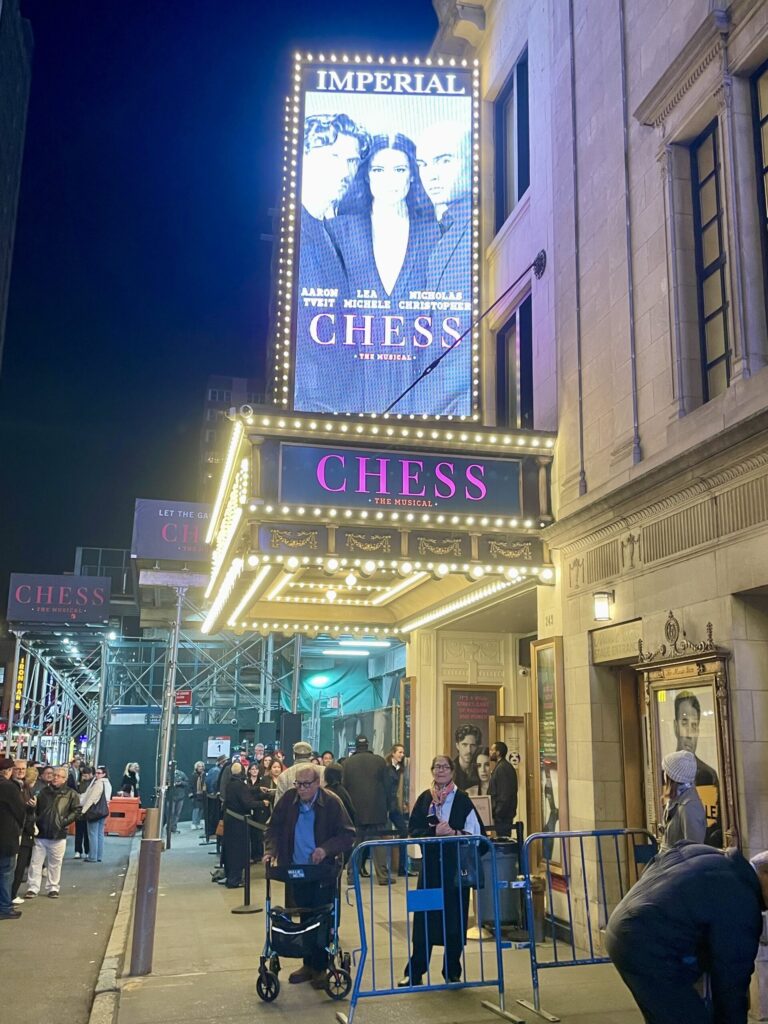
Located at 249 West 45th Street between Seventh and Eighth Avenues, the Imperial is easy to access from anywhere in New York City. If you are coming by subway, the closest stations are Times Square–42 Street (served by the N, Q, R, W, 1, 2, 3, 7, and S trains) and 42 Street–Port Authority Bus Terminal (served by the A, C, and E trains). From either station, it is a short walk north and west to the theatre.
For those traveling by bus, multiple MTA lines run through the Times Square area. If you are arriving by car, be aware that West 45th Street can be congested before and after showtime, so allow extra time for drop off or parking. Several parking garages operate on nearby blocks, though rates vary based on time and day. For most visitors, walking or taking the subway remains the most efficient option.
The Imperial’s Role on Today’s Broadway
As Broadway continues to evolve in the twenty first century, the Imperial remains firmly in the conversation as a prime house for major musicals and theatrical events. Its size makes it adaptable for both revivals and new productions. Its history gives it credibility and audience recognition. And its central location makes it an ideal destination for tourism, local theatergoers, and serious Broadway fans.
With the arrival of the new Broadway production of Chess in 2025 (we loved this show), the Imperial will once again stepped into the spotlight. The show’s large cast, dramatic visual design, and ambitious themes are well suited to the theatre’s dimensions and atmosphere. Observers expect the Imperial to continue attracting productions that want both scale and emotional resonance.
A House Built for Big Feelings
Walking into the Imperial Theatre feels like walking into a space designed to hold stories that matter. It does not overwhelm you with gilded ornamentation, nor does it push toward minimalist modernism. Instead, it strikes a balance between elegance and practicality, history and progress, spectacle and intimacy. For more than one hundred years, it has been a Broadway home for musicals with heart, ambition, and staying power. And in the decades ahead, it will continue serving as one of the great storytelling stages of New York.
If you are planning a trip to Broadway, the Imperial is a theatre worth experiencing not just for the show you will see, but for the legacy you will be stepping into.