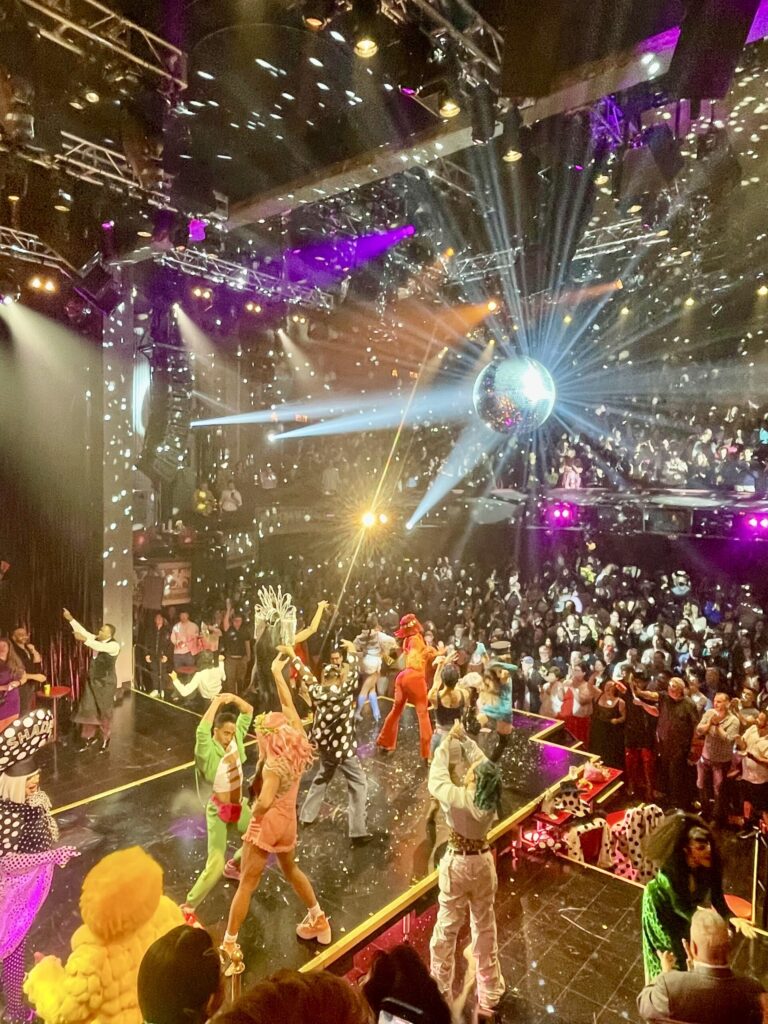
CATS: The Jellicle Ball is a phantasmagorical pinballing vortex of a human dance party wrapped in a heartbreaking true-life cat fantasy saga and moon drama teeming with Olympic ballroom gymnastics-style athleticism, centered in an emotionally stirring human whirlpool of disco ball pageantry surrounded by an enchanted crowd of raucous theatergoers ready to disappear from our shitty real world into a parallel feline universe fueled by the snap of unfolding fans and the whoosh of stolen designer bags twirling in a kaleidoscope of Broadway flamboyance.
That sentence, woof. Let’s take a deep breath.
Seriously, this show is wild.
For those of us not raised in theater families or steeped in Broadway culture during our formative years, the very idea of CATS is confusing. We know it was a major success in the musical theater world decades ago, and more recently was a terrible animated movie featuring A-list stars without genitalia. Now for some reason we’re hearing about CATS again, but not as the CATS from the past. This CATS involves something called the Jellicle Ball, which sounds like a mashup of Cinderella’s lost shoe, a happy doomsday cult, and a box of colorful sexy popsicles.
But a Jellicle Ball isn’t any of those things.
I don’t think I’m knowledgeable enough to explain exactly what CATS: The Jellicle Ball means or fully represents, but it’s important to try to understand things that are new to you. That’s how we grow, after all. So let’s begin our analysis of CATS: The Jellicle Ball with the story behind the story of how it began: as a poem. By T.S. Eliot. Yes, the guy from your high school English class.
The Ultimate Historical Hook Up: Eliot Meets Lloyd Webber
Back in 1939, Eliot published Old Possum’s Book of Practical Cats, a collection of whimsical, rhythmic poems he wrote for his godchildren. He was playing with language, giving these eccentric fictional felines secret, complex names and distinct personalities. Decades later, a British pop-opera maestro named Andrew Lloyd Webber—who grew up falling asleep to those exact bedtime poems—decided to set the verses to music. You may have heard of him. (He has no relation to Weber grills, which is only one b.)
When Lloyd Webber premiered CATS in London in 1981, and then on Broadway in 1982, it kicked off the “British Invasion” of mega-musicals. Audiences were asked to accept human dancers in spandex, leg warmers, and synthetic fur aggressively nuzzling the front row. The original show was a massive, decades-long hit, but it was also a polarizing, campy endurance test. Yet, hidden beneath the cheesy 1980s synthesizers and literal junkyard sets was a structural reality: the show was inherently a dance revue built around a secretive, insular community gathering for a high-stakes annual ritual. God, subcultures were so cool back then.
Enter Paris Is Burning and the Underground Ballroom Scene
Fast forward to the dark days of the pandemic lockdown. Directors Bill Rauch and Zhailon Levingston were brainstorming how to breathe new life into classic theater. They looked at the core text of CATS and realized something crazy: the lyrics Lloyd Webber set to Eliot’s words—”Jellicle cats come out tonight,” “Queens of the night,” and the absolute obsession with having distinct, carefully guarded names—mapped seamlessly onto contemporary ballroom culture.
Pioneered by Black and Latinx trans women and queer people in Harlem during the late 20th century, the ballroom scene was a vital underground sanctuary. As immortalized in Jennie Livingston’s seminal 1990 documentary Paris Is Burning, these balls allowed marginalized individuals, who had been rejected by their biological families, to form “Houses” (part competitive team, part chosen family). At the balls, they would walk the runway and battle in categories like “Realness,” “Runway,” and “Vogue” for trophies, validation, and survival.
The creative team realized they didn’t need actors to lick their paws or pounce on stage. The inherent swagger, stealth, and fierce confidence of a cat were already embedded in the DNA of vogue and runway performance. To bring this world to life authentically, they brought on ballroom icons Omari Wiles and Arturo Lyons to choreograph, transforming a polarizing 80s musical into a thumping, fan-clacking masterpiece.
The Plot: The Ultimate Runway Battle
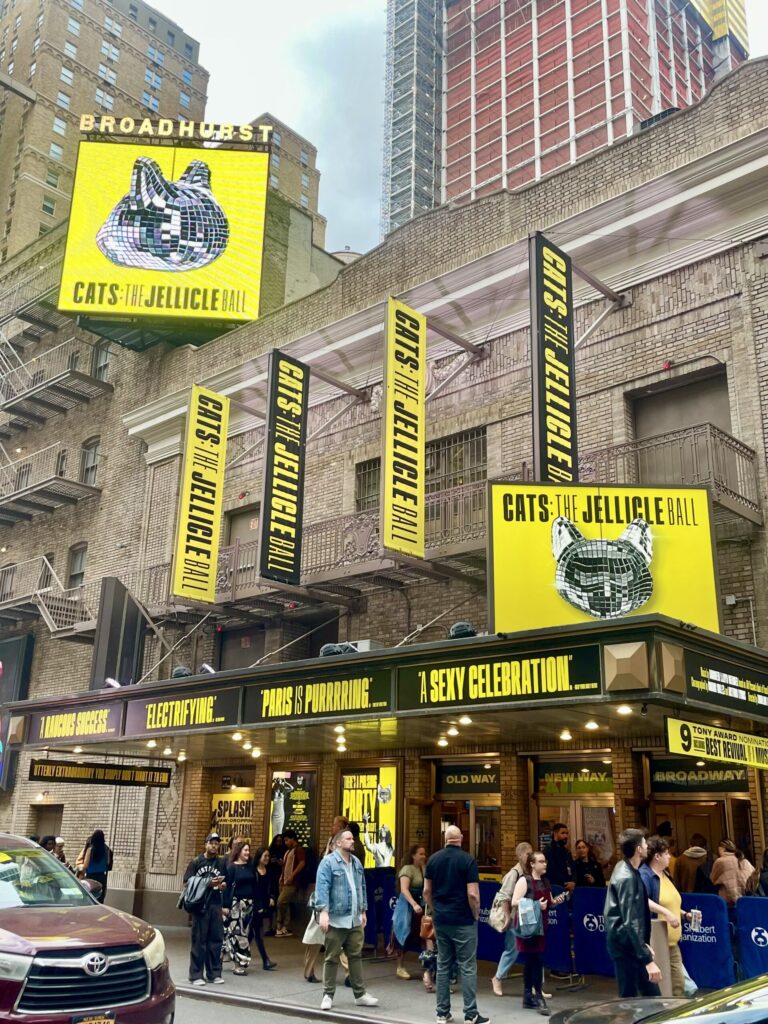
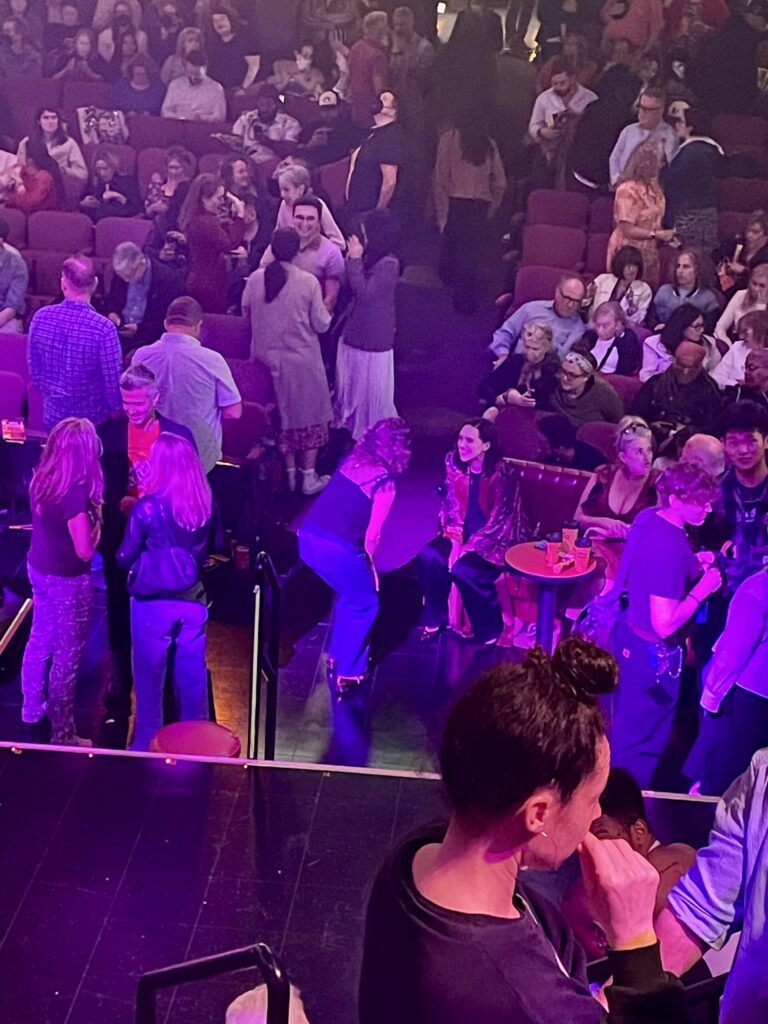
So, what actually happens in this show? The plot of CATS: The Jellicle Ball structures the musical as an epic, night-long ballroom competition. Rachel Hauck’s brilliant scenic design strips away the trash heap and transforms the stage into a glittering catwalk jutting straight into a raucous audience. My wife and I were lucky enough to have stage-side seats, which—being so close to actors—was an electric experience and unforgettable lifelong memory.
During the runway battle different Houses, like the House of Dots or the House of Macavity, strut their stuff under pulsing club lights and dazzling dance routines. The ultimate prize of the evening is the “Jellicle Choice” bestowed by the grand judge and community elder, Old Deuteronomy. The winner gets to ascend to the “Heaviside Layer,” which in this production represents a triumphant transition into a life of freedom, armed with the ultimate blessing, confidence, and validation of their community.
The Characters Reborn
For those of us not familiar with the characters, the parade of cat personalities can be a little overwhelming. The characters you might vaguely remember from pop culture are completely reimagined as runway competitors:
- Munkustrap: The elegant, commanding Master of Ceremonies who keeps the categories moving, hypes up the crowd, and directs traffic on the floor.
- Jennyanydots: No longer a lazy housecat, she is the fierce Mother of the House of Dots, whipping her young “kittens” into shape for a high-energy tap and vogue-style opening number.
- The Rum Tum Tugger: A gender-fluid, hyper-confident pop-icon archetype who commands the runway with unmatched sex appeal and rock-star swagger.
- Bustopher Jones: Traditionally an elitist, overweight cat obsessed with fine dining, he is brilliantly subverted into a joyous celebration of plus-sized “Body” excellence, completely redefining beauty standards on the catwalk.
- Mr. Mistoffelees: The magical cat whose original “conjuring” dance is translated into a mind-blowing exhibition of “Runway” and “Vogue Femme” athleticism, utilizing dizzying spins, dramatic dips, and aggressive fan-snapping that brings the entire theater to its feet.
- Macavity: The villain of the night, appearing as a menacing figure decked out in elite, stolen “Labels,” attempting to disrupt the community’s safe space.
The Heart of the Show: Grizabella and “Memory”
But the true emotional anchor of the production belongs to Grizabella, played with shattering vulnerability by ballroom legend “Tempress” Chasity Moore. Once the reigning diva who dominated the scene, Grizabella returns to the ballroom broken, ostracized, and pushing a collapsible shopping cart, her makeup smeared. She represents the tragic history of queer and trans individuals who have been disenfranchised and abandoned by time.
When she sings the iconic showtune “Memory,” it is no longer just a bombastic, overplayed 80s ballad. It is a visceral, heartbreaking plea for dignity, remembrance, and survival. When a sweet-voiced young competitor steps forward to embrace her when no one else will, the connection between intergenerational survival and community support hits freaking hard. Trust me, you just have to witness it yourself.
The Verdict: 10s Across the Board
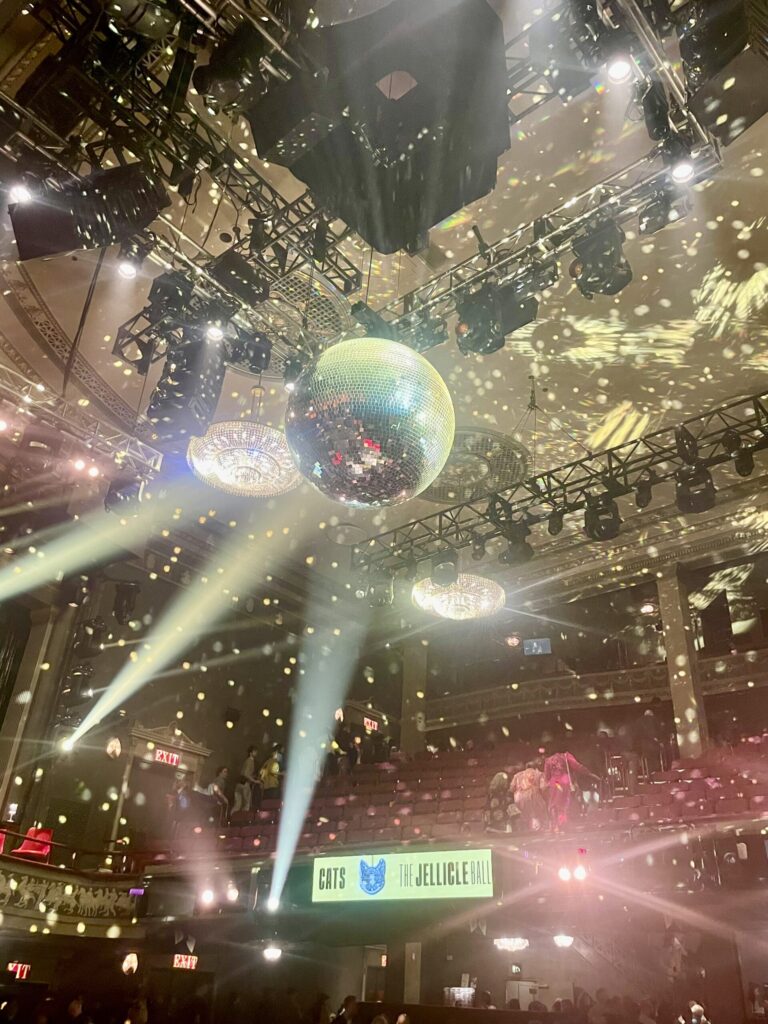
By the time Old Deuteronomy makes the Jellicle Choice, the Broadhurst Theatre doesn’t feel like a stuffy Broadway house anymore. It feels like a living, breathing sanctuary. Backed by musical arrangements that infuse Lloyd Webber’s classic melodies with contemporary house beats and R&B rhythms, CATS: The Jellicle Ball achieves the impossible. It’s dazzling and depressing. Hopeful and sad. A tribute to real people who endured real suffering and people dressed as cats.
It proves that a piece of theater once dismissed as peak superficial camp can, with the right vision, become an essential, soul-stirring monument to resilience, artifice as truth, and the beautiful power of chosen family. Leave your preconceptions at the door. This show is an absolute knockout punch of creative magic and choreographed mayhem.
Shout Out to Lena Hall
Finally, I’d like to give a special warm gesture of gratitude to Lena Hall, who was so kind and gracious to my wife—who has followed Hall’s career from the beginning. Hedwig and the Angry Inch was my first inkling that Broadway was more than top hats and jazz. JFC, a LOT more. It only took me decades to figure out how subversive Broadway really is.
Here is a pic I took of my wife expressing her admiration for Lena Hall. It’s got to be difficult being famous. My wife and I have lived in the City for decades and know to leave celebrities alone. But there was something really friendly about this interaction. We hope Lena was cool with it!
See you under the marquee. – Jim Thompson